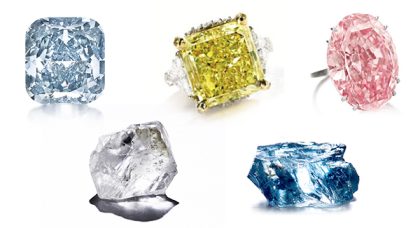
Are rare diamonds a godsend?
At the end of a sluggish year 2013, amidst the pressure on rough prices, the tightening liquidity, the drop in polished prices and the weak margins, only rare diamonds managed to stand out…
Sign-up for La Lettre from R&M to get the essentials of current affairs in the diamond industry and privileged access to the articles published below
We keep your data private and only share it with third parties that make this service possible. Read our Confidentiality Policy for more information.
At the end of a sluggish year 2013, amidst the pressure on rough prices, the tightening liquidity, the drop in polished prices and the weak margins, only rare diamonds managed to stand out…
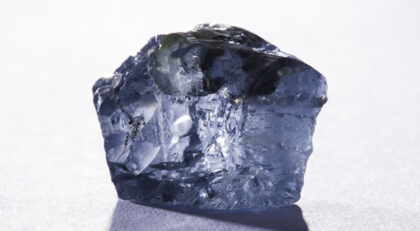
In a press release dated January 21, 2014, Petra Diamonds announced that it had recovered an exceptional 29.6-carat blue diamond from its Cullinan mine in South Africa.

Many stories have been told about Surat from history, but the latest being of this once quaint town famous for its textiles industries, now grown into a bustling town known globally for its diamond cutting and polishing (c&p) industry.

Diamond miners are treading a fine line these days, careful to keep short-term production levels in line with demand.
Much talk has arisen in the diamond industry about confronting the problem of lab-grown diamonds being mixed with natural, or mined, diamonds by naming and shaming–publicly calling out companies that are guilty of knowingly trying to pass off synthetic diamonds as natural.
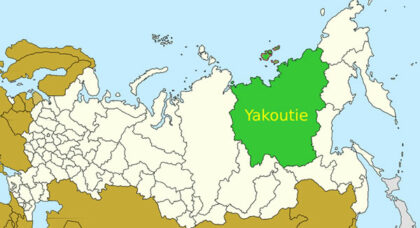
ALROSA, the leader in diamond production by volume since 2009, turned out 34.4 million carats in 2012, accounting for 27 percent of worldwide production. De Beers, on the other hand, remained the leader in value terms, posting $5.5 billion in sales.

Expectations are rising for the Chinese New Year even as China’s economy is projected to gallop at a slower pace in 2014. Despite the lower economic forecasts, the diamond industry should view developments in China with optimism rather than the cautious outlook many economists hold for the coming “Year of the Horse.”
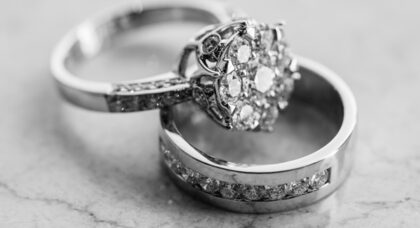
Yesterday’s meeting on synthetics was a valuable exercise in figuring out where the trade goes from here, but it turned out to be off the record, so I don’t have much to report from it. I would, however, like to relay the piece of advice I gave at the meeting.

An acquaintance of mine runs a small diamond business. He does not have a web site, nor does he have a Facebook page. He is not LinkedIn, would have no idea how to Tweet and, frankly, could not care less about social media marketing.
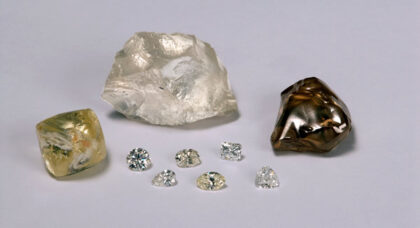
It was an unusual year indeed for the rough diamond sector of the diamond pipeline. Prices were hiked and decreased, The DTC moved to Botswana, Alrosa made the long-awaited public issuance, tenders took hold and banks, for the first time, took a public stance against the wild chase after rough and their subsequent rising prices.
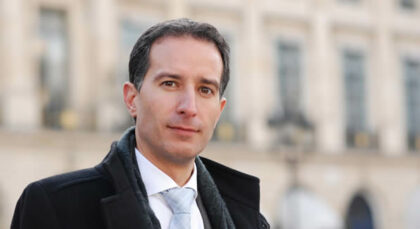
Olivier Segura manages the French Gemological Laboratory (Laboratoire Français de Gemmologie, or LFG), which was founded in 1929 by a customs official, and run by the Paris Chamber of Commerce from 1936 to 2011.

The mood in the diamond industry has already improved in 2014. Initial reports suggest the Christmas season was better than expected for the diamond trade and the U.S. appears inclined toward growth again.