
A prominent figure in diamond marketing, Sally Morrison has worked at De Beers, where she helped develop demand for natural diamonds in the United States and launched Lightbox, the group’s lab-grown diamond brand.
Interviewed by journalist Rachel Garrahan in Paris during the NouvelleBox show, she reflected on the challenges currently facing the diamond industry.
The Diamond Industry Underestimated Competition from Lab-Grown Diamonds
Sally Morrison readily acknowledges that the natural diamond industry underestimated competition from lab-grown diamonds. Convinced that consumers preferred natural diamonds, a finding supported by numerous consumer studies conducted by De Beers, the industry overlooked millennials’ budget constraints, as well as their different attitudes toward diamonds and marriage.
Yet lab-grown diamonds met very real consumer expectations: stones visually indistinguishable from natural diamonds, available in larger sizes at lower prices. Manufacturers and retailers of lab-grown diamonds have been very effective from a marketing perspective because these were digitally native companies: young, agile and quick to respond. They recognized the opportunity and successfully attracted customers looking for engagement rings.
The launch of Lightbox was intended precisely to differentiate between the two markets. Natural diamonds would retain their status as “precious” stones, while lab-grown diamonds would be positioned within a more accessible jewelry category, emphasizing colors and shapes at significantly lower prices. Instead, confusion took hold among consumers. Sally Morrison regrets that, unlike French regulations, the rules established by the US Federal Trade Commission do not require the use of the term “synthetic” when communicating about lab-grown diamonds. However, words, she emphasizes, matter.
How Can Natural Diamonds Regain Their Meaning?
For Sally Morrison, the challenge is primarily cultural and emotional. The slogan “A diamond is forever” remains entirely relevant, provided it is reinterpreted through different expressions of love and different understandings of time and eternity. Younger generations no longer necessarily view love as a promise of eternity, but rather as the intensity of a relationship experienced in the present. “We can no longer speak to them as we did in the 1950s or 1960s: ‘You’ll still have this ring when you’ve been together for 65 or 70 years,’ and so on. That is not how they see their future. They are not thinking about that.”
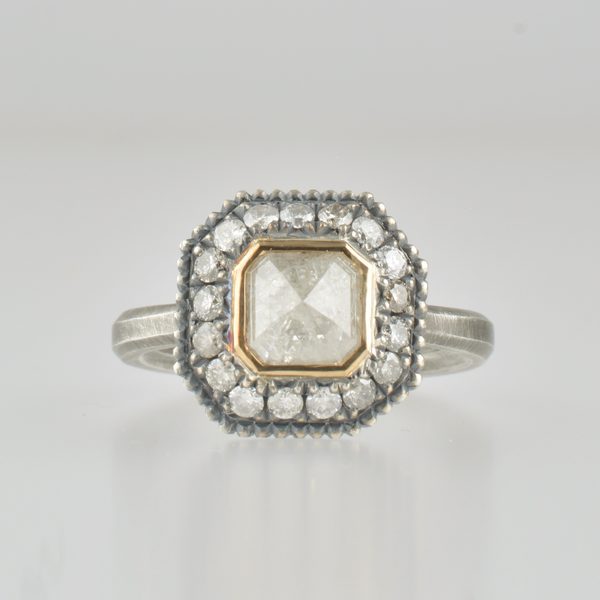
This shift is also transforming the engagement ring, which is moving away from traditional designs and may feature unconventional shapes, different diamond cuts or rough diamonds. The “Desert Diamonds” campaign illustrates this effort to renew the narrative. By highlighting natural diamonds with warmer, slightly brownish hues, it draws attention to their uniqueness. Sally Morrison notes growing interest in these stones, particularly those with color grades of K and lower. Some consumers are finding their way back to natural diamonds through this category. “In my view, the message to consumers is this: if you want something that belongs to you alone, because you deserve something that absolutely no one else in the world possesses, you need a natural diamond. If it has imperfections and other distinctive characteristics, that is because the Earth has never created two exactly alike. We need to find a way to communicate that to consumers.”
Diamond Origins: An Essential Story, but a Difficult One to Tell
In Botswana and Namibia, the diamond industry plays a major economic role. Yet explaining its positive impact is not enough to inspire desire. The challenge is to communicate this reality with emotion, without turning a purchase into a moral obligation, because that approach will not work. Morrison also points out that the diamond sector is subject to particularly close scrutiny, unlike the colored gemstone industry, where transparency is sometimes lacking.
Finally, Sally Morrison emphasizes the role of independent designers, whom she began supporting in the 2000s as a way of developing new expressions of diamond jewelry.
“I was deeply convinced that, to make diamonds interesting and generate excitement, we needed to harness the energy of people with their own creative language, their own visual language, who would take diamonds in different directions for a younger generation that values self-expression.” She also encourages jewelers to respond to the growing desire for personalization.
In her view, the future of jewelry will depend on its ability to preserve what distinguishes it from other luxury products: its capacity to embody the moments and emotions of a lifetime. “I deeply believe that when you look inside someone’s jewelry box, you can tell the story of their life. Jewelry holds moments filled with meaning and emotion. We need to make sure it continues to play that role, because that is what makes it special and different,” she concludes.
Founded and directed by London-based Darren Hildrow, NouvelleBox is a jewelry trade show held twice a year in Paris during Fashion Week. It brings together independent designers from around the world.
Main image: Sally Morrison, photo from the NouvelleBox trade show
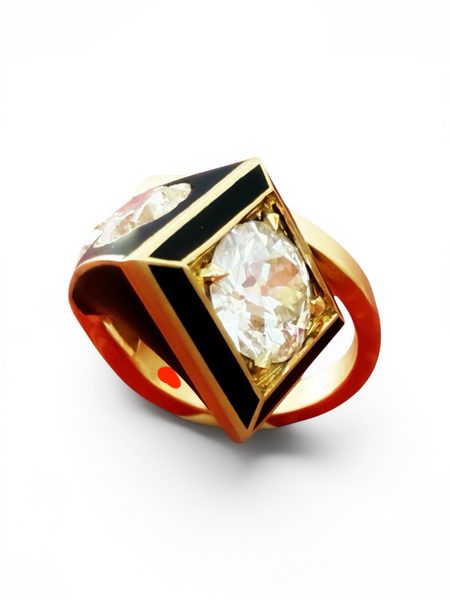
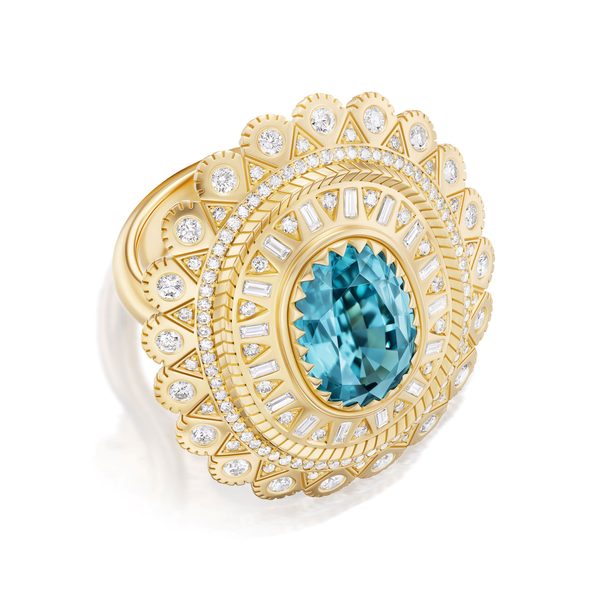
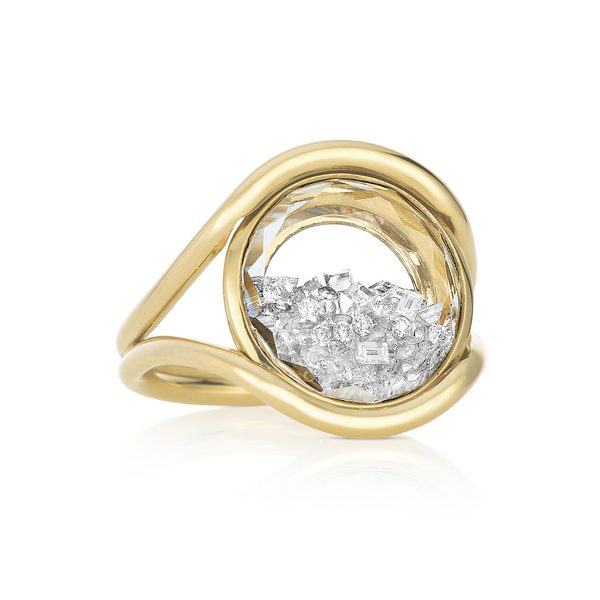
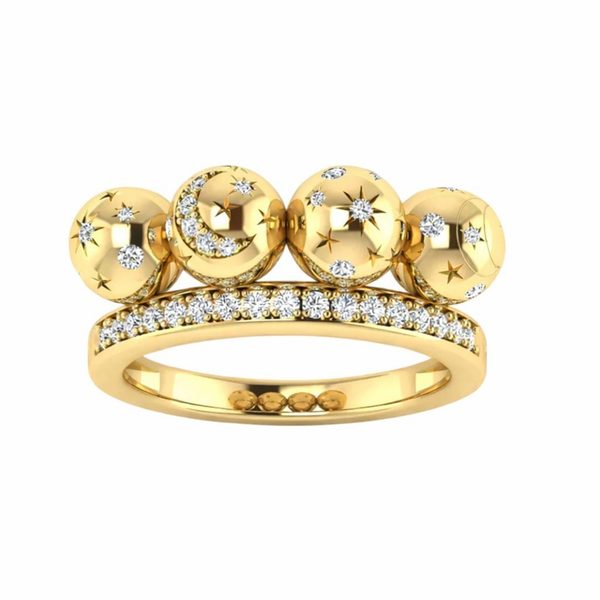
Images: Designer jewelry featured at the show © Karolina Krupickova_NouvelleBox