Legitimate synthetics
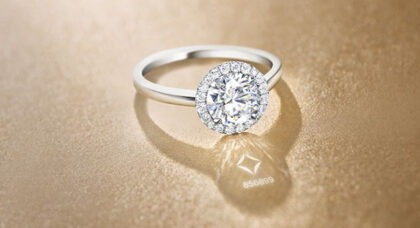
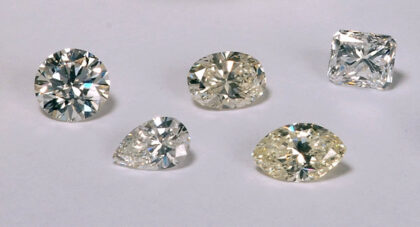
The diamond and jewelry industry needs to respond to lab-grown diamonds in a way that will differentiate the natural product.
Sign-up for La Lettre from R&M to get the essentials of current affairs in the diamond industry and privileged access to the articles published below
We keep your data private and only share it with third parties that make this service possible. Read our Confidentiality Policy for more information.
The diamond and jewelry industry needs to respond to lab-grown diamonds in a way that will differentiate the natural product.
On the face of it, Panama certainly seems like a logical place for a new diamond exchange. From the southern tip of Argentina, relatively close to the South Pole, all the way to Mexico and including the Caribbean, there is not a single diamond bourse.
Outwardly, the annual 2013 diamond pipeline looks similar to that for 2012: the rough supplies into the value chain totaled $15.56 billion (2012: $15.5 billion), which, after cutting and polishing, yielded $21.6 billion worth of polished (2012: $20.7 billion) at polished wholesale prices (PWP).
Philippe Mellier this week threw down the gauntlet to the diamond industry, and sightholders in particular. The De Beers CEO told Bloomberg News that the company plans to raise rough diamond prices by 5 percent every year as it aims to meet parent company Anglo American’s targets.
London – A new report states that the per-ounce price of gold might have already hit its high for the year and could briefly sink as low as $1,100 in the coming months.
Columnists sometimes do the strangest things, like writing a column about something they know very little, and sometimes nothing, about, tossing some figures to give credence to their writings, and in the process causing damage.
With clients now forced to wait as long as four months to have their gems graded and returned, the Gemological Institute of America announced a new suite of measures designed to decrease its labs’ much-derided turnaround time.
Investors in the Hong Kong-based retail jewelry giants have had better months than in April.
At the recent American Gem Society Conclave, speaker Peter Sheahan gave an excellent presentation about how all industries are dealing with rapid change. “Don’t build your future on the beliefs of the past,” he exhorted.
If it is true that diamonds find their raison d’être in emotions, rather than necessity, then one can see why good marketing is twice as important as in other goods.
Last week, a federal appeals court ruled that one section of the Securities and Exchange Commission’s conflict mineral rule, its response to Sect. 1502 of the Dodd-Frank financial reform law, was unconstitutional.
This past winter, one of my esteemed industry colleagues included a saying in one of his blogs that I had never heard before: If you really want to be wary of the mass media, read an article on a topic about which you are particularly well informed.