Meeus Lashes Out at Diamond Industry NGOs
Peter Meeus, the chairman of the Dubai Diamond Exchange, which is part of the Dubai Multi Commodities Centre, lashed out at non-government organizations (NGOs) for over scrutinizing the diamond industry.
Sign-up for La Lettre from R&M to get the essentials of current affairs in the diamond industry and privileged access to the articles published below
We keep your data private and only share it with third parties that make this service possible. Read our Confidentiality Policy for more information.
Peter Meeus, the chairman of the Dubai Diamond Exchange, which is part of the Dubai Multi Commodities Centre, lashed out at non-government organizations (NGOs) for over scrutinizing the diamond industry.

Mr Chairman, Excellencies Ministers of Mines, Ambassador Nhlapo, Ladies and Gentlemen,

The diamond industry should be encouraged by new initiatives to enhance the integrity of the global supply chain, not be threatened by them.

Steady demand for high-end, unique stone. Diamond exhibitors reported steady sales and strong demand for unique stones at the Basel show; however, they were frustrated by show expenses and venue changes made at this year’s fair.
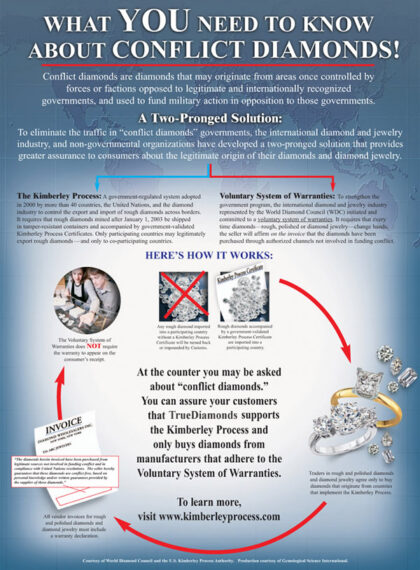
The reoccurring debates of the past few years over the evolution of the Kimberley Process (KP) have tended to revolve around a limited number of points, and have somehow always resulted in stagnation.

I’m sure our readers can’t failed to have noticed the scandal involving horse meat being passed off as beef, which began in Britain, but is slowly engulfing the rest of Europe and indeed the world, although in South Africa no horse was found but they did discover traces of water buffalo, goat and donkey.

Belgium irked the hell out of Global Witness, a world monitoring group on conflict diamonds, when it said last week that the European Union (EU) should lift sanctions imposed on the Zimbabwe Mining Development Corporation (ZMDC), which mines diamonds in Marange.
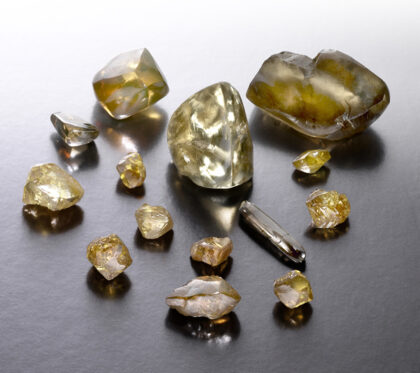
Among the many significant developments that evolved in the diamond industry in 2012 was a growing awareness about price differences between tinted and non-tinted polished stones. Diamond dealers have come to recognize stones with a greenish-brownish tint as having originated from Zimbabwe’s Marange mines.
What is the chance for an American consumer to buy these days a piece of diamond jewelry made of a rough diamond found, for instance, in the Soviet Union in 1974? Or in Angola in 1993? Or in Côte d’Ivoire in 1995? According to Chaim Even-Zohar, the “home mine” owned by the U.S. population has […]
Is it possible for a list of accomplishments to be both impressive and underwhelming? Take what happened at the Kimberley Process Plenary this year, Rob Bates writes on www.jckonline.com. This has to be one of the most impressive Plenaries ever, with the U.S. piling up quite a tally of achievements.
There is certainly no doubt that the Zimbabwe diamond conference, which was held recently in the resort town of Victoria Falls, ended with one consensus. This was: sanctions on Marange diamonds must go.
No change to conflict diamonds. The Kimberley Process’ plenary in Washington D.C. concluded today with the organization ending its monitoring on Zimbabwe and agreeing to add an administrative support team.