
Extraordinary colored diamonds, old‑cut stones with imperfect charm, iconic signatures, and gems originating from depleted mines: the diamond market is evolving toward ever greater selectiveness and singularity. Between price regulation and the rise of online sales, today’s collectors prioritize rarity, quality, and a search for meaning. Balancing emotion and strategy, Violaine d’Astorg, Head of the Jewelry Department at Christie’s Paris, analyzes the market.
IH: Which diamonds are most sought after today?
For several years now, some of our clients have been looking for old‑cut diamonds, stones with history. It is a very meaningful trend. This demand aligns with Christie’s core activity, as the House primarily works with jewels and stones consigned by private clients, which are often very old pieces.
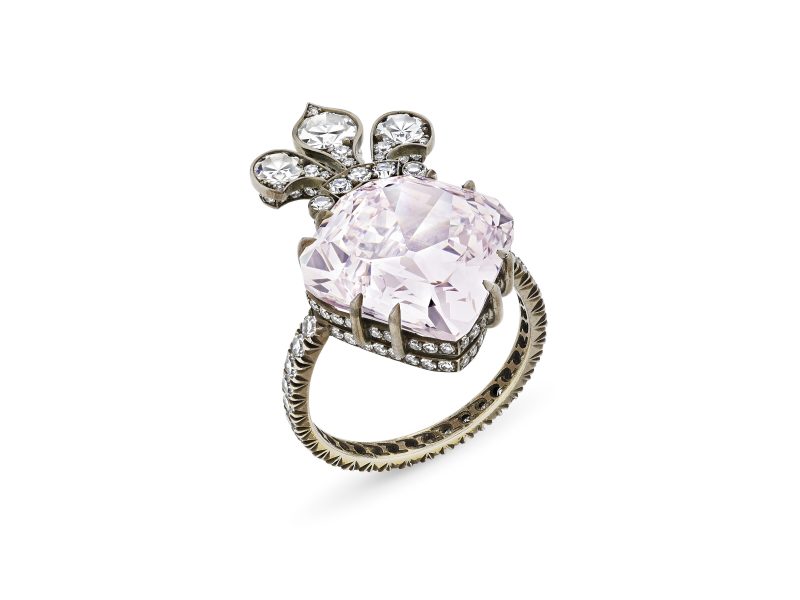
We are seeing renewed interest in rose‑cut diamonds. The more exacting the client, the more likely they are to seek out exceptionally rare stones. That said, our House must also meet the demand for more accessible diamonds within this category of old cuts.
We “forgive” these stones for not being perfect, for having a slight yellow tint or a few inclusions, because they are generous stones with a unique, highly desirable cut. They are slightly less expensive, but in an auction setting, we must present a wide range of price points.
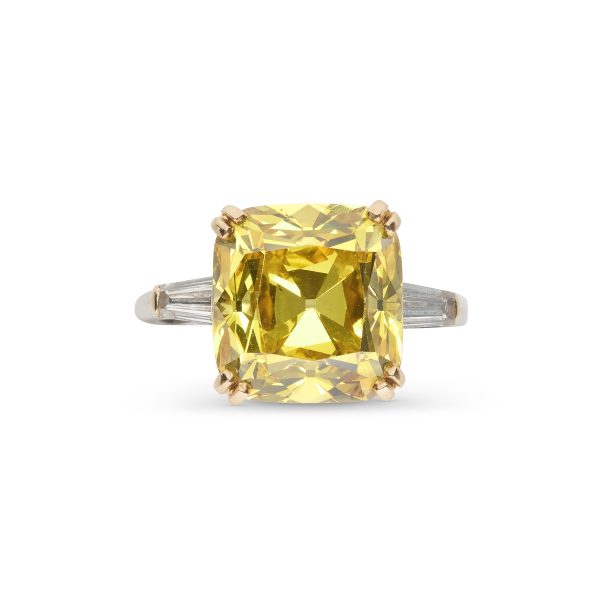
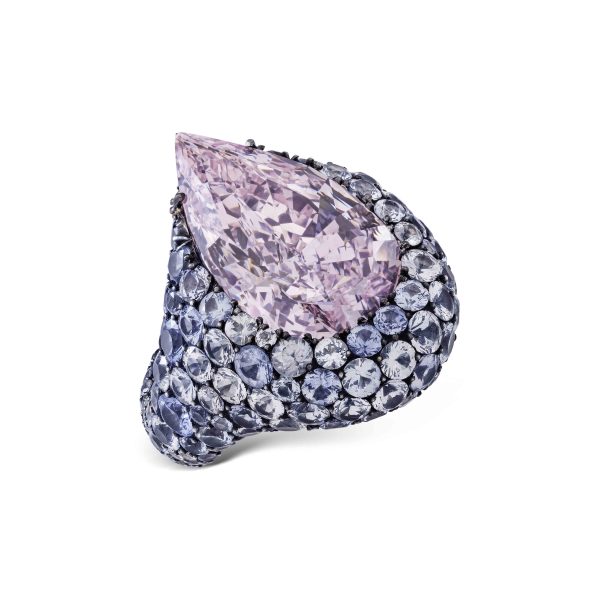
Regarding colored diamonds, major collectors have extremely high standards. Beyond the much‑coveted blue or pink diamonds, some stones are prized for their singularity. For example, last June in Paris, we sold a yellow diamond for more than €2 million, a stone with a particularly distinctive nuance that was noted on its GIA report [a ring set with a 9.67‑carat Fancy Vivid orange‑yellow diamond, sold for €2,121,200, far above its €250,000–350,000 estimate — nearly ten times the estimate, Ed.]. As soon as a diamond’s color departs from the ordinary, collectors’ interest is immediate.
IH: Are specific signatures, periods, or styles especially in demand?
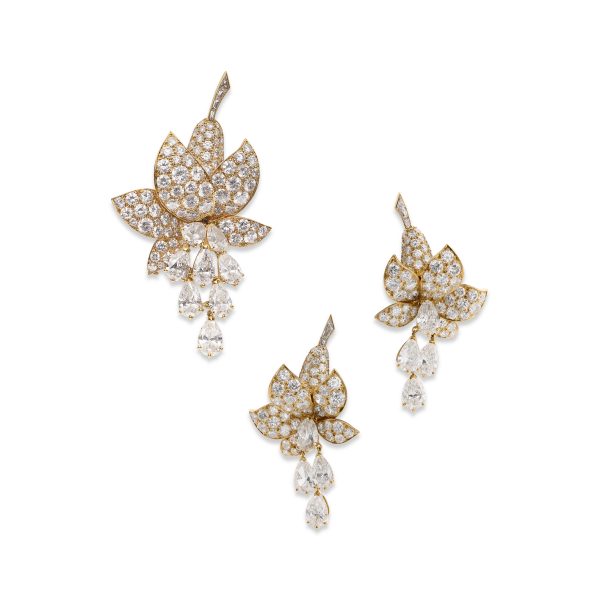
Art Deco has always been beloved, but we are seeing strong enthusiasm for pieces from the 1960s and 1970s, as well as for Retro‑style jewelry. The entire post‑war period is also very important for our collectors. What buyers appreciate in 1950s–1970s jewelry is the craftsmanship in gold, particularly yellow gold, although here we are speaking more about signatures than diamonds.
As for the most sought‑after brands and Maisons, I would first cite vintage Van Cleef & Arpels, vintage Cartier, and Bulgari. If we focus specifically on diamonds, I would mention Graff, Harry Winston, Tiffany, and Cartier from the Art Deco era.
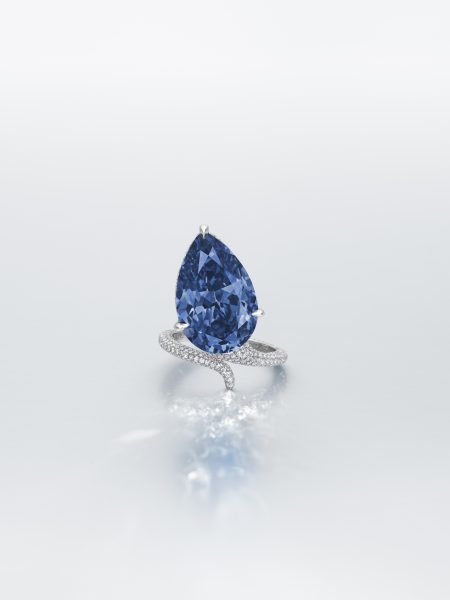
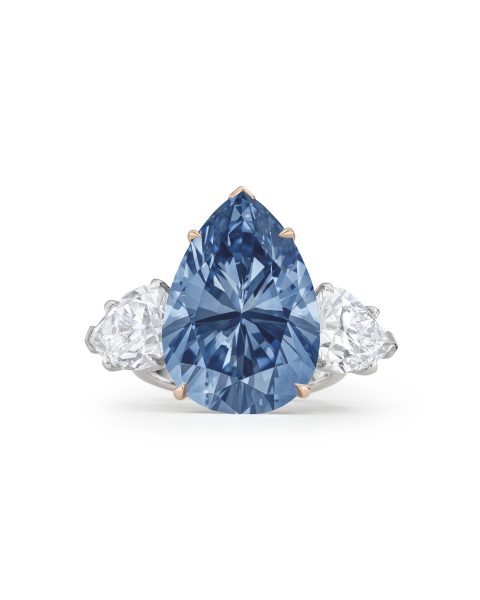
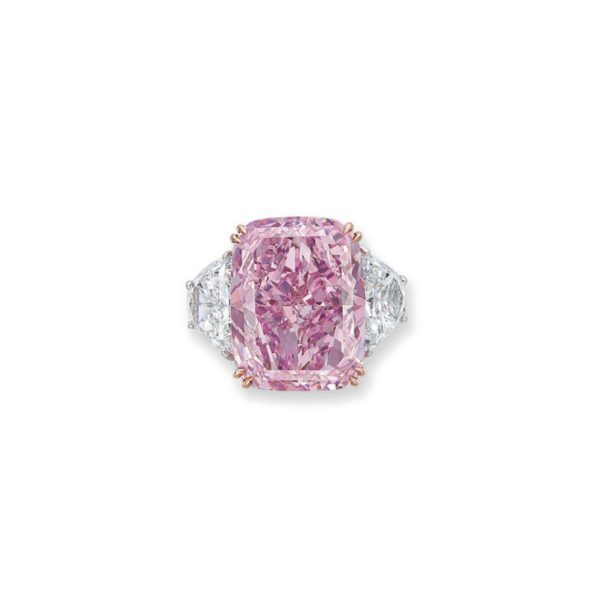
IH: More recently, the Melon Blue, a vivid blue 9.51‑carat diamond, did not reach its expected price. How do you explain this?
The Melon Blue achieved its market price. The estimate is established with the client, but the sale ultimately reflects demand, and as you noticed, the estimate did not appear in the catalogue. Our client knows that Christie’s has been number one in the market for more than 30 years, and that the House has a perfect understanding of demand and of the pricing connected to that demand. Presenting a stone without publicly listing its estimate is a sign of trust from both the consignor and buyers.
The difference between the 2014 sale price and the 2025 result is due to market regulation linked to supply and demand [the diamond sold for €28 million at Sotheby’s New York in 2014, compared with €21.1 million including fees at Christie’s in 2025, Ed.].
Such diamonds may have been rarer in 2014. Consider, for example, the price trajectory of natural pearls, or compare past and current prices of Burmese rubies, whose mines were depleted in the 19th century, or of Kashmir sapphires. These are gemstones we will no longer find, unlike colored diamonds. A stone’s price simply reflects the market at a given moment. Additional parameters also come into play, including geopolitical context, which is closely linked to our profession.
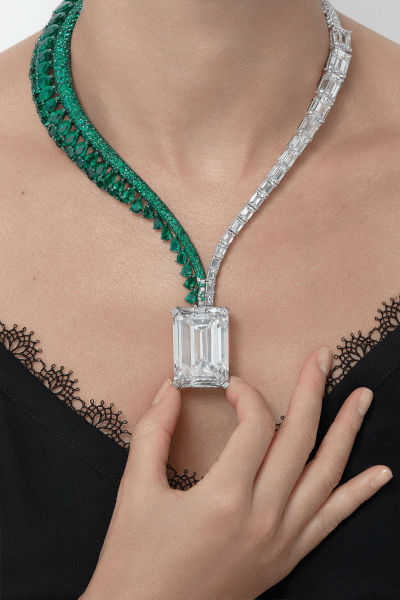
IH: The Golconda diamond, from now‑depleted mines, is it highly sought after and rising in value?
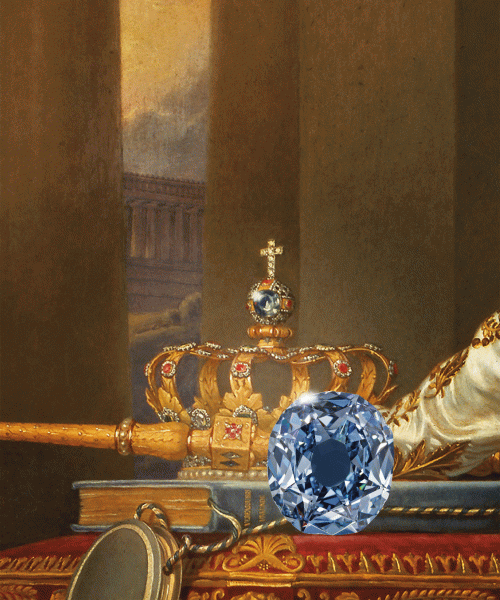
Yes, I could indeed draw a parallel between Kashmir sapphires and Golconda diamonds, since we are speaking about depleted mines. The history surrounding these diamonds is absolutely remarkable. It encompasses the history of European and French royalty. Many stones were extracted from India’s mines and brought into European courts. Historically, diamonds designated as Golconda are iconic.
I had the pleasure of giving a lecture last June alongside Capucine Juncker, who wrote a beautiful book on Golconda diamonds. Golconda is one of those names that continues to inspire dreams. Again, we are speaking of antique diamonds, old stones. For me, the “double effect,” if I may say so, is a stone that combines exceptional color and clarity and is also historically old. This reasoning applies equally to diamonds and colored gemstones.
IH: You achieved strong online sales during the lockdown period. Is this trend enduring?
We achieved a major record last June with the diamond I mentioned earlier — an absolutely sublime yellow stone with an orange overtone, which sold for more than €2 million. The pandemic indeed compelled us to rethink our digital‑sale format. How could we operate without an exhibition or the ability to welcome the public to view the pieces?
We revisited the model used for the Elizabeth Taylor sale, our first online auction at Christie’s New York in 2011. Ten years later, we adopted the same approach, and it worked extremely well. What was extraordinary was that from the very beginning, more than 10,000 unique IP addresses were connected. I remember asking our New York client service team to verify the numbers because I thought they had added an extra zero. But they were correct. Those IP addresses represented more than 40 different nationalities, with over 500 registered bidders. It is extraordinary to witness a format where time zones and borders no longer exist, and where clients anywhere in the world can place bids at any moment.
Initially, people believed online auctions were easier to manage than live sales with catalogues, but that assumption is incorrect. An online sale requires five photographs per jewel. You can imagine the importance of photographic work. Certification standards must be even more rigorous. We sent more stones to laboratories — LFG, SSEF, Gübelin, GIA — so that remote buyers could access the maximum amount of information before bidding.
And while I do miss the extraordinary energy created by auctioneers in a live sale room, the excitement around the objects, I must acknowledge that online sales have become my number‑one priority for our clients. Visibility now transcends borders and is amplified. Christie’s still conducts live sales in other locations around the world, but here in Paris, distance‑selling performs extremely well. Before moving online, we had never surpassed €10 million in a single sale. Our June 2025 auction set an exceptional record with €16 million, and, perhaps most notably, several pieces exceeding €1 million sold quickly and with ease.
Let me give another example. In 2021, a Jean Fouquet jewel exceeded €1 million, more than double its estimate, and this occurred during only our second online sale. Not everyone is able to sell such pieces. The jewel contained no diamonds, only an aquamarine, but it was an iconic Art Deco creation known throughout the market, though almost never seen. Presenting it was extraordinary.
Online sales are extremely significant for our clients, and we continue to develop them.
IH: Compared to 10 or 15 years ago, do you see changes in buyer behavior or in their choices?
They are unquestionably seeking quality. I also observe that they are extremely well‑informed, thanks to the educational work surrounding auctions and the jewelry market. Today, they know what the 4Cs mean and they follow diamond pricing, whereas previously, buyers would go to their local jeweler or a diamond dealer, purchase a stone and hope to realize a gain later. It was not necessarily a bad idea — everyone builds their project as they see fit — but today what has changed is the search for quality and reassurance.
There have been too many diamonds sold as investment stones, sometimes with great success, sometimes with disappointment. Buyers today need to know exactly what they are acquiring. Sellers, on their side, understand the value of placing several buyers in competition. For me, the essential element is the seller. Without sellers, I have no sales, no jewels, nothing to present to the market. My first priority will always be our consignors. I look for the best sales strategy for them, the best place in the world to present their piece. It is not necessarily Paris; it may be Geneva, Hong Kong, New York, or London. Another major focus is identifying all potential buyer profiles — private clients, dealers, lapidaries, and collectors — who may compete with one another.
IH: With antique jewelry and old diamonds, how do you manage traceability?
It is complex, of course, but we comply with our obligations. As much as possible, we try to learn the origins of the stones or the jewels. We have established a list of precise questions to ask. However, in most cases, we are dealing with family jewelry handed down across generations. I have the privilege of meeting the grandchildren, great‑grandchildren, and sometimes the children of the owners, which provides a degree of assurance. We know whom we are dealing with.
IH: How should one buy a diamond when purchasing through an auction house? What advice would you give?
We are fortunate to have a very close relationship with our buyers. Trust is essential. Buyers should never hesitate to ask questions to the Heads of Sale or to our specialists. We will always be there to help them “buy well,” meaning at the right price and in the clearest, most coherent way. Christie’s is an auction house with public exhibitions open to all, making it easy to visit and ask questions.
There is no magic formula. One must be well‑informed and well‑advised.
IH: What message would you like to convey to your clients?
It is not always easy for clients to assess the value of their jewelry with certainty, since the market evolves. A family stone spoken of for generations is not necessarily what one believes it to be. Clients should not hesitate to request expert opinions and consult specialists. That is our role: to take the time to explain the market value of their stone, what it represents, whether it is preferable to sell it with or without its mounting, and whether to offer it in a private sale or at auction. There are many ways to sell a jewel or a stone.
Main Image: Violaine d’Astorg
Photos ©Christies